
Ramblings
music, literature, football etc.
Interests other than those leading to lucre. Doesn’t everybody?
I’ve attended to gigs, listened to albums on Spotify and read great works of literature – full disclosure, I’ve also read plenty of not-so-great works of literature. I’ve stood in the cold at far too many football matches, stood in the rain at rugby internationals, cowered in the shade at The Oval with only sun cream and beer for company.
Too darn hot.
The North American World Cup has, after a single week, gone some way in convincing me that many of the “Americanised” attributes of the beautiful game might actually work – as long as they’re correctly managed. VAR, a curse on the game throughout much of Europe, has had bodies thrown at it by FIFA and the decisions tend to be far smoother, far swifter and – Scotland and Australia apart – fairer than some of the decisions we’ve seen over the years since its introduction.
Secondly, the speed with which the game is played has improved as a result of the FIFA directives aimed at combatting time wasting in dead-ball situations and at injuries – although it was somewhat galling to se the referee of the US’ second match against Australia being given on pitch treatment for cramp by the same player he’d hectored off the pitch whilst suffering the same malaise earlier in the match. According to some sources this has resulted in the ball being active for a slightly greater proportion of the full duration than 2022. With some flex and a bit of finessing, this could – and should – only improve with time.
This brings us to the hydration break. For this observer, the root idea is sound – it’s a summer tournament, played out by footballers and match officials who are expected to give 100% of their physical efforts for up to 100 minutes during the first phase of matches and – potentially 135 minutes during the knock-out stages in temperatures often in excess of thirty degrees centigrade. A provision for taking on water at reasonably regular intervals isn’t something that should be scoffed at. However, the ideal is being somewhat lost when the timings of these breaks – brought to you by a brand you’ve never heard of, but probably controlled by a soft drinks giant from Atlanta – appear to be dictated by the hidden hand of the marketeer; cut aways whilst play is ongoing, a late return to the actual game to ensure the full twenty seconds of the ad is shown would imply that player’s health might just be secondary to fiduciary considerations. The full impact of this measure will only be truly discernible once the the 2026/27 season begins and we get to see how the Premier League, Ligue 1, Serie A, La Liga and the Bundesliga et al, treat this great new marketing opportunity.
But here’s the rub. I’m currently sitting at the kitchen table in my flat in Madrid wearing – apologies in advance – only a pair of shorts. It’s currently around 36 degrees centigrade at two pm in a city where the temperature is generally at its most oppressive at around 6pm. Indeed, nighttime brings scant relief as the thermometer can, oan often does, register around 30 degrees at midnight. Meanwhile tomorrow is expected to bring temperatures in the low forties in Madrid, Sevilla, Bilbao, Zaragoza amongst other major conurbations – many of which will be hosting games this very weekend in four years time. The expectation of human beings to fully exert themselves at 30 degrees centigrade for up to two hours. As a human – and I’ve had decades of experience of this human thing – simply existing at 40 degrees is a big ask. One’s body warms up, we rapidly become dehydrated without any effort whatsoever and – as happens with alarming regularity – we die when asked to endure any physical activity for periods in excess of twenty minutes. I don’t know about the temperatures at venues in Morocco or Portugal – Spain’s co-hosts for the tournament, but there’s no reason to expect that anywhere non-coastal will mirror those temperatures in Spain.
So what’s my point? Simple. From a logistical perspective, with their modern ports, train systems, airports, Spain, Portugal and Morocco have all of the facilities to host a 48 team World Cup tournament. Unfortunately, they also have – as is becoming standard rather than exceptions – a summer climate that can, and does, kill people.
And the answer? There are options available; pushing the start date back a few months
Bookworms’ corner
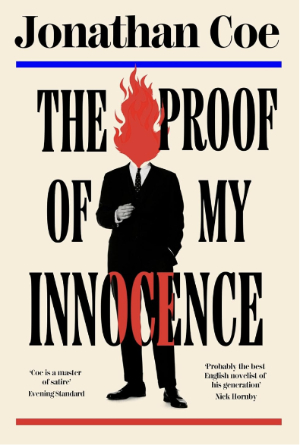
I once encountered a disappointing Jonathan Coe novel. This isn’t it.
Jonathan Coe has long been one of the sharpest chroniclers of modern Britain, blending satire, political unease and intimate character study in novels such as What a Carve Up! and Middle England. Coe’s fiction portrays an unmoored middle-aged UK; bewildered by shifting power structures, cultural fragmentation and elites whose quiet consolidation of control reshapes everyday life. The Proof of My Innocence continues this trajectory, exploring themes of paranoia, manipulation and the fragility of truth in contemporary Britain.
It’s also, as are nearly all of Coe’s novels, a page turner in the greatest sense of literary fiction – a story-telling genre he shares with a host of other great English language novelists, which both informs and entertains.
The Proof of My Innocence by Jonathan Coe
Penguin 2025
Musical interlude
We’re fast approaching the anniversary of this Madrid gig in February 2020. Despite news reports emerging from Italy describing a new virus that was taking its toll on the elderly and sick.
If you like modern British Jazz and it’s seemingly unstoppable rise over the past few years, give Resoution 88’s back catalogue a listen.
Copyright – David Genis 2026. With thanks to WordPress.
 DAVE
DAVE 